When people begin looking for mental health support, one of the first challenges they encounter is understanding the different types of professionals available. Terms like therapist, psychologist, and psychiatrist are often used interchangeably—but they each have different training, roles, and areas of expertise.
At the New York Mental Health Group we believe that understanding these distinctions can help you feel more confident in finding the right type of care for your needs.
What Is a Therapist?
“Therapist” is a broad term used to describe licensed mental health professionals who provide counseling and talk therapy. Therapists help individuals navigate emotional, behavioral, and relationship challenges.
Therapists may hold licenses such as:
Licensed Mental Health Counselor (LMHC)
Licensed Clinical Social Worker (LCSW)
Marriage and Family Therapist (LMFT)
Licensed Professional Counselor (LPC)
What Therapists Help With
Therapists commonly work with individuals experiencing:
Anxiety and stress
Depression
Relationship issues
Trauma
Life transitions
Grief and loss
Self-esteem challenges
What Therapy Looks Like
Therapy typically involves regular conversations focused on understanding emotions, developing coping skills, improving communication, and creating positive behavioral changes.
Many therapists specialize in particular approaches, such as:
Cognitive Behavioral Therapy (CBT)
Trauma-informed therapy
Couples counseling
Family therapy
Mindfulness-based therapy
What Is a Psychologist?
A psychologist is a mental health professional with advanced doctoral training in psychology, human behavior, emotional functioning, and psychological assessment.
Psychologists usually hold a:
Ph.D. (Doctor of Philosophy in Psychology)
orPsy.D. (Doctor of Psychology)
What Psychologists Do
Psychologists often provide:
Therapy and counseling
Psychological testing
Diagnostic evaluations
Cognitive assessments
Forensic evaluations
Psychologists are specially trained in administering and interpreting standardized psychological tests, which can be used to assess:
Personality functioning
Intelligence
Learning disorders
ADHD
Trauma
Risk factors in forensic settings
Forensic Psychology
Some psychologists specialize in forensic mental health and conduct evaluations related to:
Competency to stand trial
Child custody
Criminal responsibility
Psychosexual risk
Emotional damages in legal cases
Unlike psychiatrists, psychologists generally do not prescribe medication in most states.
What Is a Psychiatrist?
A psychiatrist is a medical doctor (MD or DO) who specializes in mental health. Because psychiatrists attend medical school, they are licensed to prescribe medication and evaluate the biological aspects of mental health conditions.
What Psychiatrists Help With
Psychiatrists commonly treat:
Major depression
Bipolar disorder
Schizophrenia
Severe anxiety disorders
ADHD
Panic disorders
They often focus on medication management and may work alongside therapists or psychologists as part of a broader treatment team.
What Psychiatric Treatment Looks Like
Psychiatric appointments often involve:
Reviewing symptoms
Evaluating medication effectiveness
Adjusting prescriptions
Monitoring side effects
Some psychiatrists also provide therapy, though many focus primarily on diagnosis and medication management.
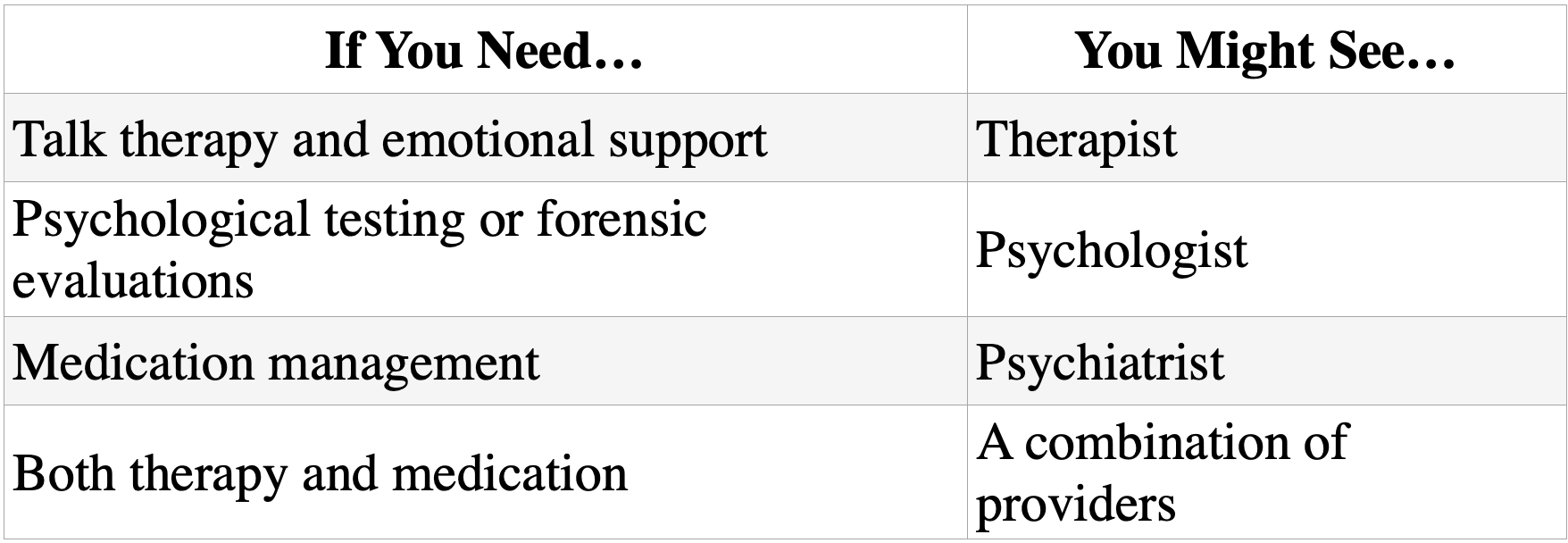
Which Professional Is Right for You?
The right choice depends on your specific needs.
There’s No Wrong Place to Start
One of the most important things to remember is that you don’t need to have everything figured out before seeking help. Many people start with a therapist, who can then recommend additional services if needed.
The most important step is simply reaching out.
At the New York Mental Health Group our team works collaboratively to ensure clients receive personalized, compassionate, and evidence-based care tailored to their unique needs.