Psychological vs. Psychosexual Evaluations: When Are They Used?
When legal, clinical, or institutional decisions depend on a person’s mental health or behavioral risk, choosing the right type of evaluation is essential. Among the most commonly requested assessments in forensic mental health are psychological and psychosexual evaluations. Though the terms are sometimes used interchangeably, they are distinctly different in scope, purpose, and application.
At New York Mental Health Group, we provide both types of evaluations with objectivity, expertise, and sensitivity. Below, we break down what each assessment involves, who typically requests them, and when they are most appropriate.
What Is a Psychological Evaluation?
A psychological evaluation is a comprehensive mental health assessment used to understand an individual’s cognitive, emotional, and behavioral functioning. It can provide diagnostic clarity, treatment recommendations, and insight into a person’s psychological strengths and limitations.
When Is It Used?
Psychological evaluations are typically requested in the following contexts:
Criminal cases: To assess competency to stand trial, criminal responsibility (insanity defense), or mitigation during sentencing.
Family law: To determine parental fitness or evaluate mental health in custody disputes.
Civil cases: In claims involving emotional distress, disability, or psychological injury.
Educational or workplace settings: For accommodations, disability determinations, or return-to-work evaluations.
Who Requests It?
Attorneys (criminal defense, family, civil)
Judges or courts
Employers or schools
Mental health providers
What’s Included?
Clinical interview
Mental status examination
Review of records
Standardized psychological testing (e.g., personality, intelligence, trauma inventories)
Diagnostic impressions (DSM-5-TR)
Treatment or risk-related recommendations
What Is a Psychosexual Evaluation?
A psychosexual evaluation is a specialized assessment focused on an individual’s sexual development, attitudes, behaviors, risk factors, and potential for future sexual offending. This evaluation is most often used in legal cases involving sexual misconduct, sexual abuse, or sexually inappropriate behavior.
When Is It Used?
Psychosexual evaluations are generally requested when:
An individual is facing criminal charges involving sexual behavior (e.g., sexual abuse, exploitation, indecent exposure).
There are allegations of inappropriate sexual conduct involving minors or vulnerable adults.
A court or treatment team needs to assess risk of sexual recidivism, treatment readiness, and treatment needs.
Agencies are making placement decisions (e.g., foster care, residential facilities).
Who Requests It?
Defense or prosecuting attorneys
Judges or probation officers
Child protective services or family court
Sex offender treatment providers
What’s Included?
Detailed sexual history and behavioral analysis
Clinical interview and collateral interviews
Review of criminal, mental health, and social history
Standardized risk assessment tools (e.g., STATIC-99R, STABLE-2007, ABEL Assessment)
Assessment of paraphilic interests, deviant sexual arousal, and impulse control
Treatment recommendations and risk management planning
Note: Psychosexual evaluations are not therapy sessions and are conducted with strict neutrality. Informed consent and appropriate legal protections are essential due to the sensitive nature of the topics.
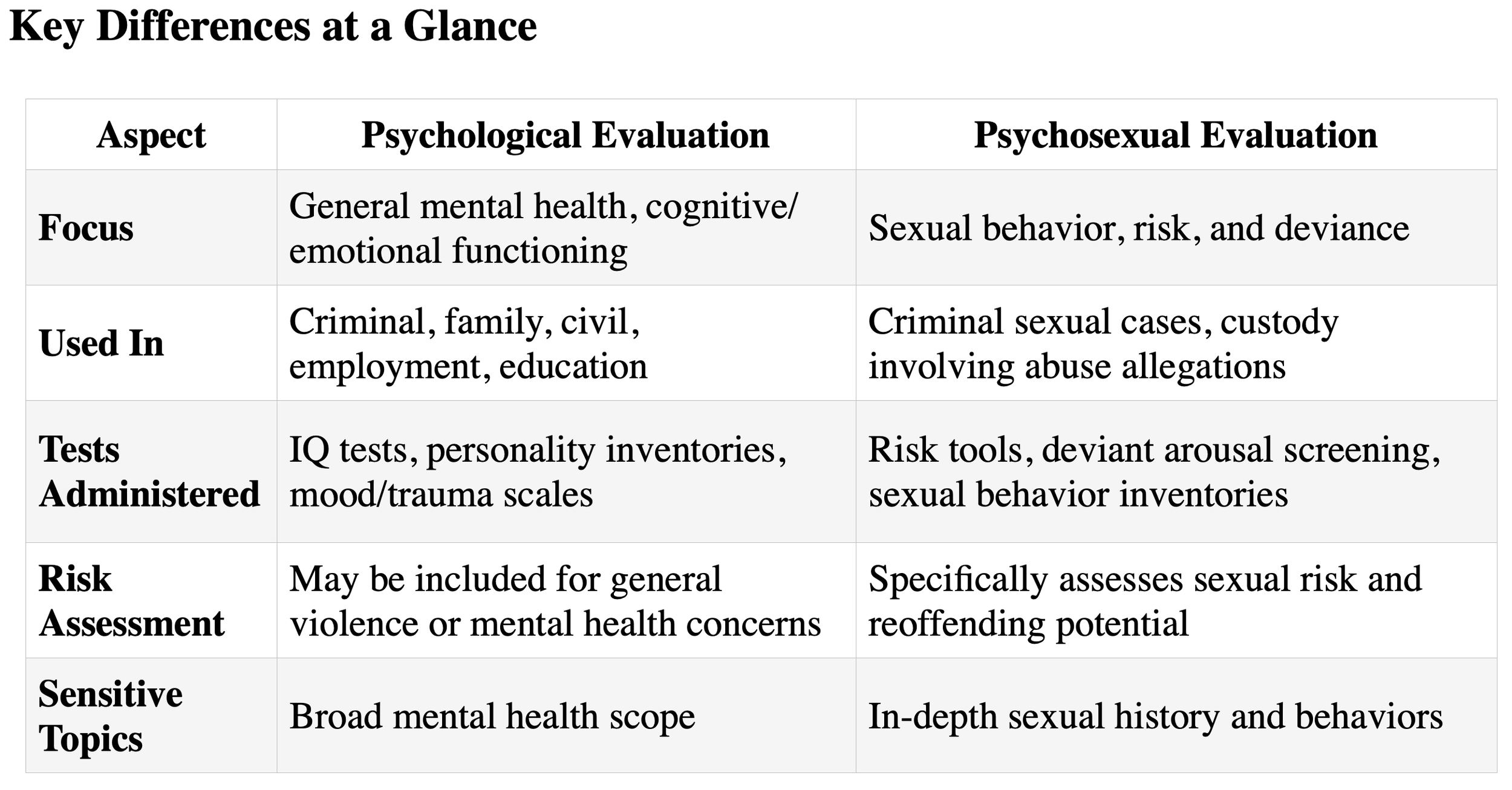
Which Evaluation Does Your Client Need?
If you are unsure whether a psychological or psychosexual evaluation is appropriate for your case, consider:
What is the primary legal question?
If it relates to general mental functioning, behavior, or parenting capacity → Psychological.
If it concerns sexual behavior, risk, or misconduct → Psychosexual.What outcome do you need the evaluation to support?
Are you seeking mitigation, diagnosis, treatment planning, or risk containment?Will the evaluation be used in court?
Both types of evaluation can be court-admissible, but the required methodology and documentation may differ.
Expert Forensic Evaluations at the NYMHG
At New York Mental Health Group, our forensic evaluators provide both psychological and psychosexual evaluations that are:
Objective and neutral
Thorough and evidence-based
Legally sound and report-ready
Conducted with sensitivity to cultural, trauma-informed, and ethical considerations
Whether you're a defense attorney, prosecutor, or guardian ad litem, we’re here to support your case with clear, defensible, and professional assessments.